ARTIST SPOTLIGHT: BILL STEVENS
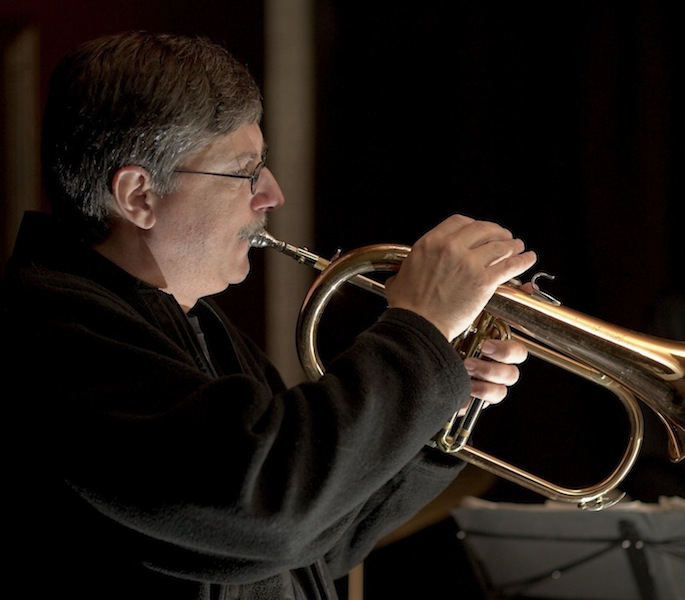
Artist Spotlight is our regular feature introducing you to Cities and Memory artists around the world with an in-depth interview. In this edition, we introduce you to New York-based sound artist, musician and composer Bill Stevens, whose work featuring spoken word, field recordings and improvisation is inspired by John Cage, minimalist composers and the jazz greats.
Tell us about your practice, Bill:
My compositional process is based in sound through ambient minimalist settings that often utilise spoken word, fine art inspiration, field recordings and improvisation.
Two projects that I found interesting had their start through Cities and Memory – “Intermission” – a suite written in isolation during the COVID pandemic and “Everyday Utopias” as part of Well Being Cities. (see my Soundcloud page)
BILL'S CITIES AND MEMORY SOUNDS
The interview continues below ⬇️, and this map collects together all of Bill’s contributions to Cities and Memory:
What does it sound like where you're from?
New York is typically a place of immense sound and activity. Cars, sirens, construction, people everywhere, but with these sounds there is an energy that cannot be described.
An energy that has brought artists in all disciplines from around the world to tap into that environment in search of the creative spirit, the new.
However, New York also has its quiet moments, like in the early morning when you can hear the wind through the canyons of buildings, birds in communication, businesses beginning their day. You can even hear yourself breath.
It’s a magical time, a moment that occurs each day before the energy returns once again.
How did you first discover a love of sound in your life?
Through a study on the composer and musician John Cage, I came across this quote: “Any sound can be music.”
That was really the beginning for me. That statement opened my ears to all the sounds around us and it seemed like the whole world was singing.
What is it that you love most about what you do?
As a teacher, I was always looking for ways to teach the concept of creativity. I take this idea into my musical discipline each day whether I am practicing, composing or performing.
The idea that every moment is another step into the unknown as we search for the new while not looking back even as we use the lessons we have learned over time.
Can you share an example of your work with us?
My two pre-sound works, those in a more contemporary jazz setting, are some that I feel quite good about: – “lema sabachthani” – a 15 movement suite based on the series of paintings “the Stations of the Cross” by the abstract expressionist Barnett Newman; and the followup album “Connections”. (These can be found at billstevens.bandcamp. com).
What's a contribution to Cities and Memory that you're proud of, and can you tell us a bit about it?
My composition, Everyday Utopias from Well Being Cities, seems more pertinent today than when this was composed.
I originally wrote that the piece “is a cautionary tale of how simple it would be to enter into a nuclear World War if we are not alert to what that would mean for the planet. We have it within our power and abilities to avert this, as of now, imaginary future. For true sustainability and wellbeing to occur, we must be able to put our differences aside and see where we have commonalities leading to a fundamental shift in thinking that looks to revive and protect our planet looking toward a collective future, a more resilient future”.
Today I can’t help but think, will the arts lead in the revolution or will it follow?
Recommend us some of your favourite artists!
Jazz was a huge part of my pre-sound pieces and those who were in my listening rotation were Miles Davis, Don Cherry, Wayne Shorter, Herbie Hancock, Bill Laswell and Jon Hassell.
This led me to start searching out European jazz and currently the minimalists – Steve Reich, Phillip Glass and the ambient composers, of course, Brian Eno to highlight a few.
What's a sound that has a particularly important significance for you?
Living in New York City, I can’t help but listen to the sounds of this city – its melodies, its counterpoint, its rhythms.
Time for an equipment nerd question! What is some of your favourite kit, and why do you love it so much?
I am incredibly lo-fi in my use of equipment. I work through Logic Pro and Audacity and in my playing I use effect pedals to manipulate my sound in various ways.
I also tend to incorporate the organic sounds of friends playing various instruments, vocals in reciting spoken word and field recordings I pick up in my walks just using my phone.
What are you working on next?
Currently, I am researching and formulating ideas to write a spoken word requiem.