ARTIST SPOTLIGHT: RAFAEL DIOGO
Artist Spotlight is our regular feature introducing you to Cities and Memory artists around the world with an in-depth interview. In this edition, we meet Portugal-via-London sound artist and field recordist Rafael Diogo, who has contributed both amazing recordings from remote places and fantastic ambient compositions to the project.
Tell us about your practice, Rafa:
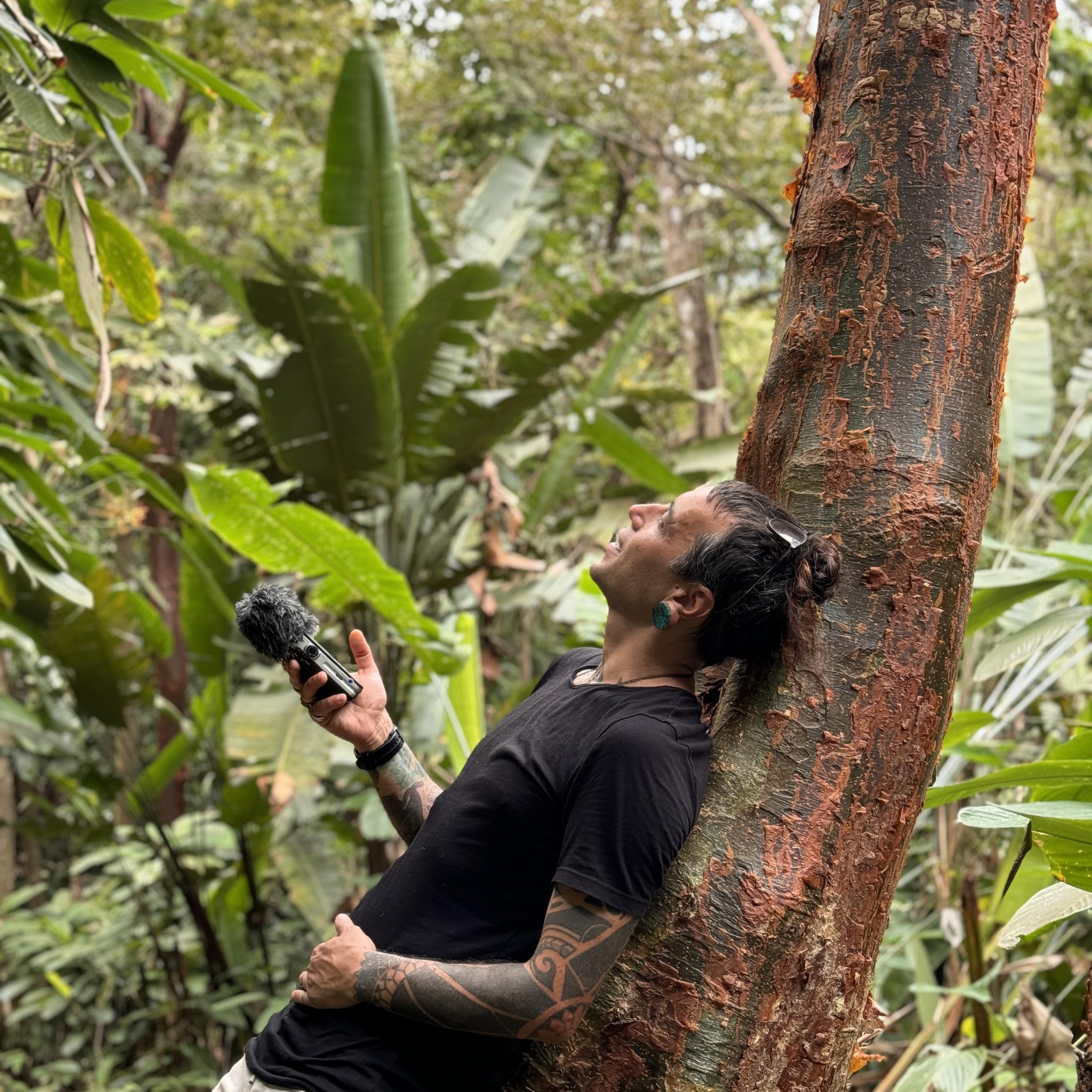
Right now, I’m going through a large collection of sounds I recorded during my last two trips to the Amazon rainforest, traveling through Colombia, Peru, Bolivia, and Ecuador.
It’s an overwhelming yet beautiful process: listening back to the voice of the jungle, reconnecting with the places, the silences, the sudden bursts of life, and the emotions carried within each sound. Every recording feels like a small memory capsule—an echo of time lived in deep presence.
I’m currently working on my second album with Chitra Records, an ambient music label I really admire. My first release with them was a deeply rewarding experience — it felt like finding the right home for my work.
Over the years, I’ve done sound design for different projects, but more and more, I feel connected to creating ambient music that comes straight from the natural world. I don’t want to control the sound — I want nature to lead.
In the past, my work has been featured by Cities and Memory, and shown at places like the Pitt Rivers Museum in Oxford and the Barbican Centre in London. I’ve had the chance to perform live in Portugal, and my soundscapes have been played on BBC Radio, NTS Radio, and Resonance Extra.
More recently, I was grateful to be named a runner-up in the Sound of the Year Awards for one of my natural sound recordings.
One project that means a lot to me is a sound healing piece I made with Earth Echo, a collective focused on using sound to heal. It’s called Oceania’s Song and was created in partnership with the Captain Paul Watson Foundation. It’s a tribute to the deep, wise spirit of whales. While making it, I felt like I was in conversation with something ancient and alive. It reminded me why I fell in love with sound in the first place.
RAFAEL'S CITIES AND MEMORY SOUNDS
The interview continues below ⬇️, and this map collects together all of Rafael’s contributions to Cities and Memory:
What does it sound like where you're from?
It sounds like the mighty Atlantic Ocean breathing in and out — a heartbeat I’ve always known. I grew up with the sound of waves roaring through my window, carving the clay of rugged cliffs just beyond the horizon of my childhood. The seascapes there are alive, powerful, endless.
I remember seagulls spiralling through salt-laced winds, their cries sharp and familiar, and storks gliding above — silent guardians perched on rugged cliffs and crumbling chimneys. There’s a quiet rhythm to it all. Days arrived slowly, wrapped in the hush of sleepy Alentejo villages — where cattle wandered lazily along dusty paths, and time seemed to rest beneath the shade of olive trees.
I can still hear the low murmur of elders at the cafés, their voices blending with the soft clang of weathered fishing nets and the ceaseless song of cicadas, rising and falling like the tide.
It’s the sound of old souls — of land and sea in conversation. A place where even silence speaks in waves.
How did you first discover a love of sound in your life?
I began my journey into ambient music when I was 17, playing as an ambient DJ at small events and gatherings in Portugal. My sets always wove together deep ambient textures with world music, creating a space of connection and exploration.
But when I moved to London, something shifted. I felt the urge to go deeper — not just to mix music, but to create my own soundscapes. That led me to study sound design, and soon I was composing soundtracks for animations and short films. Yet, I realized that recording sounds simply for media wasn’t enough. I wanted the recordings themselves to become the heart of my compositions — the backbone of the music, not just a layer.
So I began investing in gear and made it a priority to capture the places I traveled to, turning them into sonic memories. I remember a moment in Vietnam, recording the haunting call of gibbons echoing through the forest.
That sound alone told a whole story — it carried emotion, depth, and narrative, more than any instrument could. It was a turning point. I realised the power of a single, organic sound to shape an entire piece.
Since then, I’ve never stopped seeking out the unique voices of nature — those subtle, rare sounds that awaken something deep within. They’ve become the soul of my music.
What is it that you love most about what you do?
What I love most, first and foremost, is the ritual of gathering my gear before a journey. There’s something incredibly grounding about preparing for travel — choosing the tools that will help me listen more deeply. Then comes the act of traveling itself: the movement, the anticipation, and the journey into remote, untouched places.
I’m especially drawn to these remote environments—places where human-made noise disappears. There, I can focus entirely on natural sounds. The Amazon rainforest, in particular, gave me a whole new sense of connection to recording. It’s an entirely different world of sound, one where you might be the first — and only — person to ever hear certain sonic patterns. That thought alone is profoundly humbling.
In the last couple of years, I lost interest in walking around with a microphone in my hand. I realised it just doesn’t work that way anymore. These days, I prefer to remove myself entirely. My presence often interferes with the clarity of the sounds, so I now rely almost exclusively on drop rigs.
 I use three different sets of drop rigs that I leave in place for full 24-hour cycles across various parts of the rainforest. Some are positioned close to the forest floor, others are attached high in the trees — what I call my “tree ears” — and others are spaced widely apart (around 100 cm) to capture a broad, immersive perspective of the sonic landscape.
Most of my recordings are made using LOM omnidirectional microphones. I love them — they’re incredibly portable, crystal clear, and resilient against the intense rain and humidity of the jungle. Shout out to my Sony PCM-D100, my most trusted companion in the field. I also rely on my Zoom F3 recorders and my Sony A10 — doesn’t have the best sound quality, but it saved me more than once when other mics failed.
One of my favourite moments comes after the field work — returning to my home studio in London or Portugal and spending nights immersed in the recordings. It’s an incredibly transporting experience, almost like returning to the rainforest itself. From there, I select the recordings that spark the strongest memories and begin reimagining them into ambient pieces that evoke those feelings. Studio time is essential — it’s where the raw sound transforms into something emotionally resonant and alive.
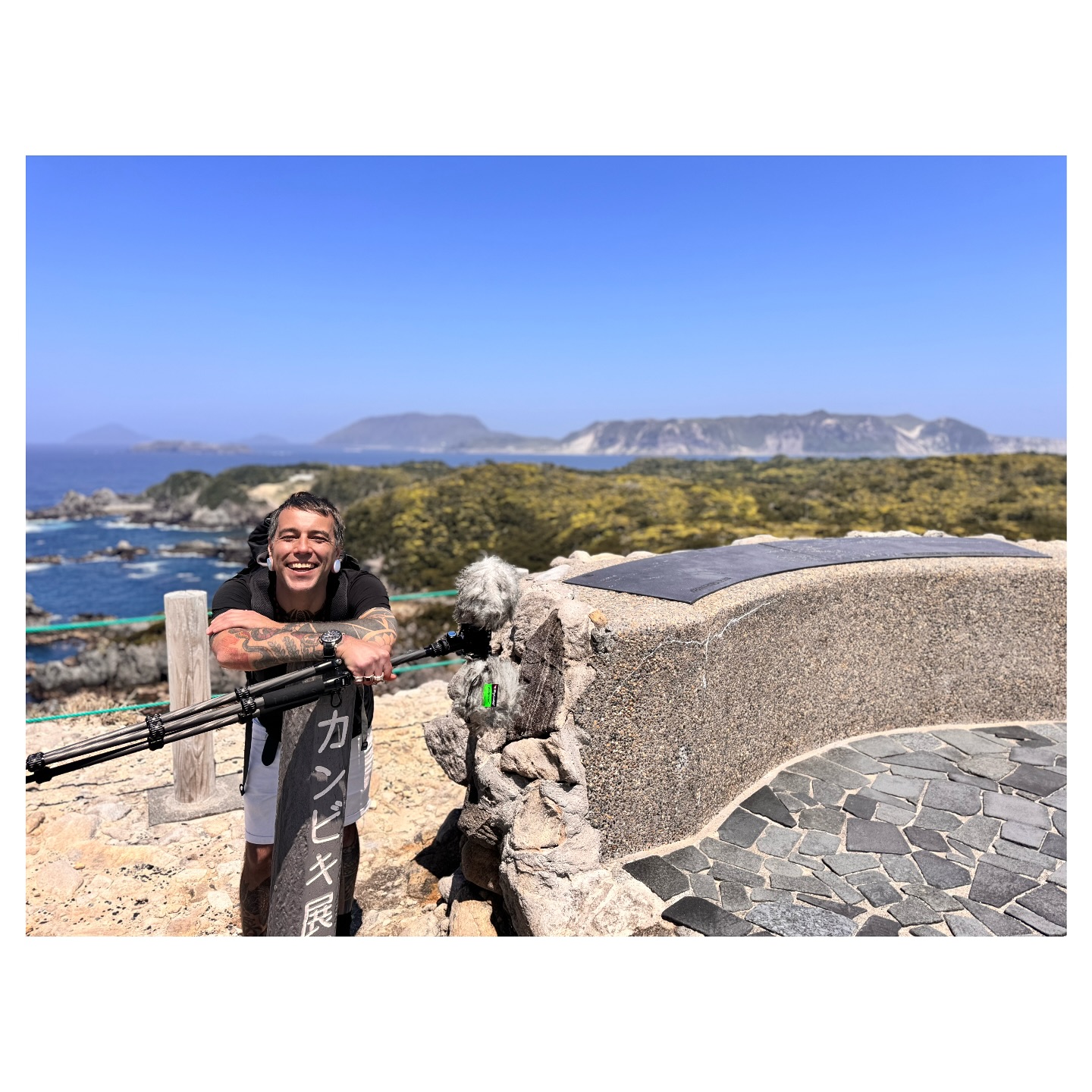
Looking ahead, I want to focus more on sound installations. On a recent trip to Japan, I discovered soundproof isolation boxes in public places like train stations, designed for quiet rest. That inspired the idea of Nature Sound Pods — small immersive spaces where people can retreat from anthropogenic noise. Imagine stepping into a pod in the middle of a busy city, and suddenly, you’re surrounded by the untouched sounds of the Amazon. It’s about wellness, presence, and reconnection — giving people a moment to simply listen and remember that we are, at our core, part of nature.
Can you share an example of your work with us?
While I believe I’ve created stronger works since, I hold a deep and personal connection to my first album as Deep Dive Sound. It was born as part of my master’s thesis—a sonic exploration of liminal states, where the boundaries between the formed and the formless, the structured and the wild, begin to blur.
In that work, I tried to express the intensity that exists within those in-between spaces—the vivid textures of soundscapes evolving through cycles of chaos and harmony, mirroring life’s delicate dance between balance and disarray. The sonic textures and artifacts within the album carry emotional weight; they are fragments of sonic memory, captured during my travels through the Philippines and Vietnam. Every field recording, every layer, holds a moment, a place, a feeling.
What's a contribution to Cities and Memory that you're proud of, and can you tell us a bit about it?
One of the pieces that truly embodies my artistic voice is “Nostalgia”, a dark ambient track I composed for the Sounds of Portugal compilation.
It serves as a sonic urban poem — an auditory journey through Lisbon, experienced through the perspective of a sound artist. “Nostalgia” blends field recordings, spoken word, and granular textures to evoke the quiet solitude and emotional layers of city life. Drawing inspiration from the poetry of Fernando Pessoa, the track explores the delicate tension between individuality and loneliness in an urban world shaped by capitalism and ego.
In this soundscape, the city’s familiar sounds — like the echo of tram lines — transform into tonal characters, weaving memory into the fabric of the present moment. At its core, “Nostalgia” is an invitation to reflect on lost connections, shared cultural experiences, and a quiet longing for a time when human touch and community were central to the rhythm of everyday life. It’s a meditation on the fleeting nature of connection and the emotional pulse of an ever-evolving city.
Recommend us some of your favourite artists!
Two people deeply shaped the way I began to listen — not just hear, but truly experience sound as something sacred, immersive, and alive. The first was Jorge Reyes, a visionary sound shaman from Mexico. His work opened a portal for me. He wove ancient pre-Hispanic instruments with the raw, elemental sounds of the jungle — creating experimental, ritualistic soundscapes that felt like sonic medicine. Listening to him was like walking through a dream shaped by ayahuasca or San Pedro: wild, ancestral, and deeply healing. His music wasn’t just art — it was ceremony.
The second is Steve Roach, whose vast, ethereal soundworlds feel both timeless and otherworldly. His ambient compositions carry a sense of spaciousness and reverence, often evoking deep inner journeys. Interestingly, Roach and Reyes eventually came together and collaborated for several years—two sonic visionaries merging their worlds. Their combined work still resonates deeply with me today. Both artists taught me that sound can be a bridge — between worlds, between people, between the seen and unseen. And their influence continues to ripple through everything I create.
What's a sound that has a particularly important significance for you?
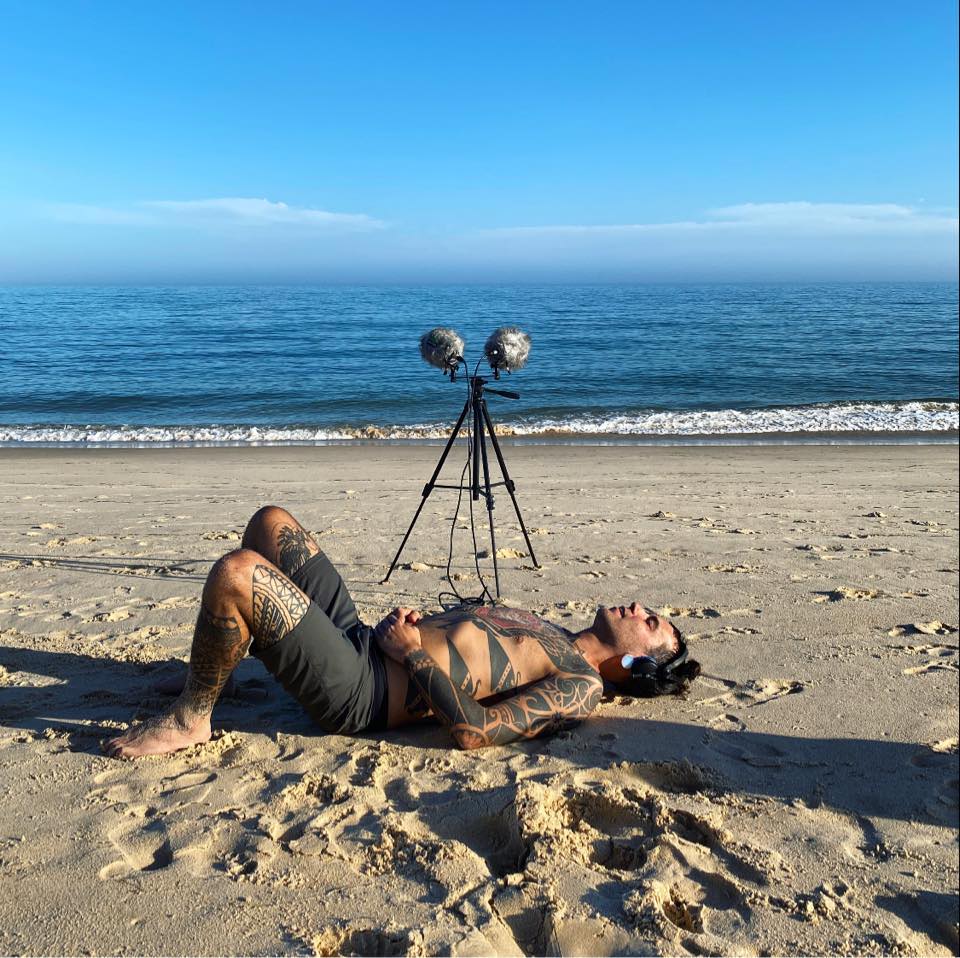 I could easily say that the sounds of the Amazon rainforest are the most mesmerising soundscapes I’ve ever heard — and they are indeed incredible. But if I’m being honest, the sound that truly holds my heart is the sea. It’s not just a sound; it’s a part of me. I grew up with the ocean.
My favourite sound in the world is the beaches near my home in Portugal. There’s something profoundly soothing about the gentle waves breaking on the shoreline, the soft rush as the tide pulls back, and the delicate rattle of pebbles shifting beneath the water. And then there’s the sea spray—it has this magical whisper, almost like the ocean is breathing.
To me, those sounds are more than just background noise—they’re memories, comfort, and home all at once.
Time for an equipment nerd question! What is some of your favourite kit, and why do you love it so much?
I love to create ambient music with an analogue and organic feeling. My process often begins with a recording — something that sparks a memory from my travels or from moments of activism. I bring this audio into my DAW, where it becomes the backbone of the piece, anchoring the emotional core.
From there, I begin layering ambient pads using my OP-1 synth, letting intuition guide me. These sounds evolve as I run them through my pedalboards — especially the Chase Bliss Mood and the Microcosm — where I sculpt and manipulate textures, allowing new frequencies to emerge and deepen the atmosphere.
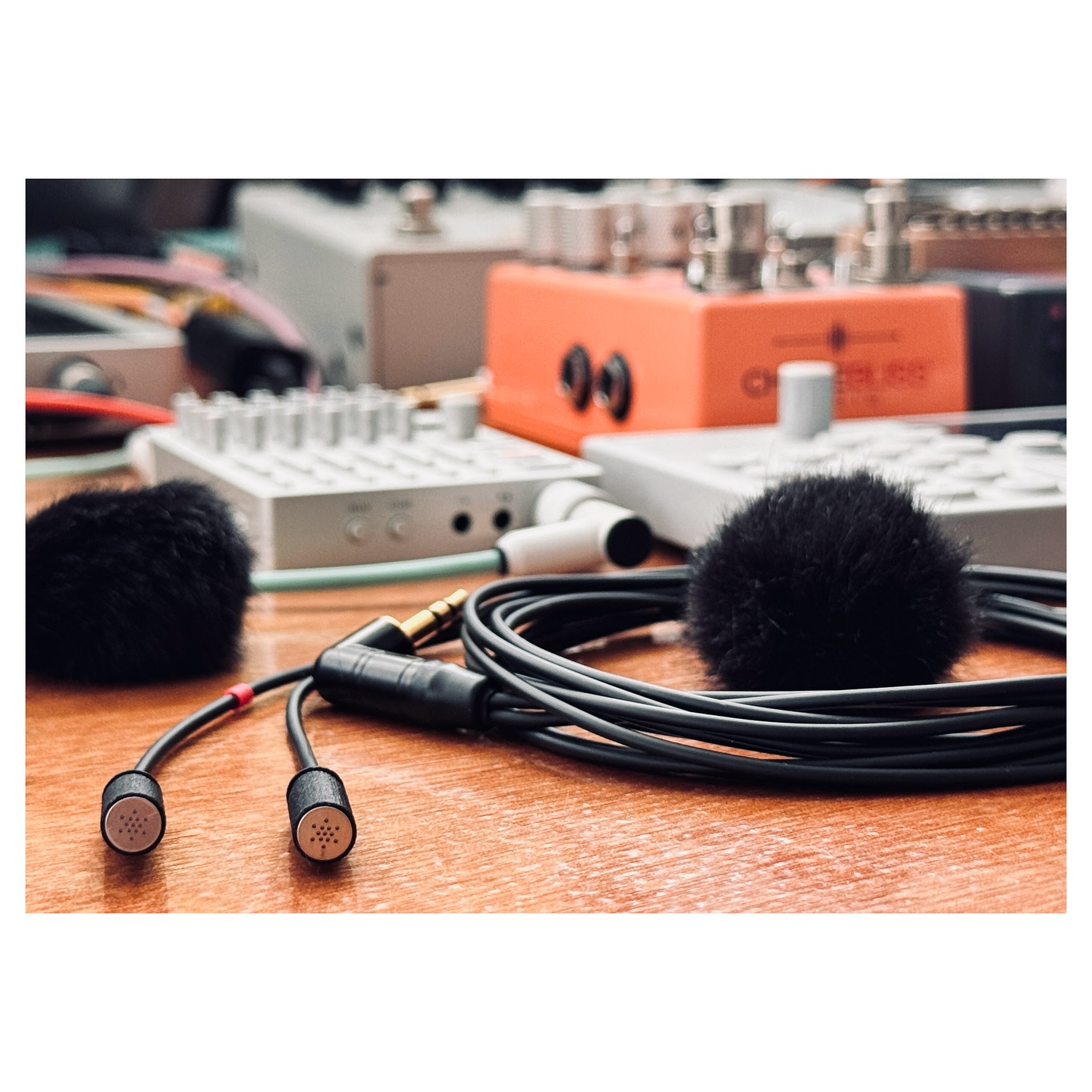 To enrich the sound even further, I experiment with contact mic wood boxes. I interact with natural materials like sand, jungle roots, and seashells, using them to add a tactile presence and a kind of vintage, vinyl-like warmth to the piece. I also enjoy using hydrophones to capture subtle movements, adding a sense of spatial motion and underwater life to the mix.
This whole process feels like bringing a memory back to life — translating emotion into dreamy soundscapes. In a funny way, my ambient tracks become portals; when I listen back, they remind me of the photos and field recordings from those same journeys. It’s like the music becomes a living archive of my experiences.
What are you working on next?
At the moment, I’m creating an online net label called Ucayali Records — a space dedicated to sharing the voices, songs, and traditions of indigenous tribes, particularly from the Amazon rainforest.
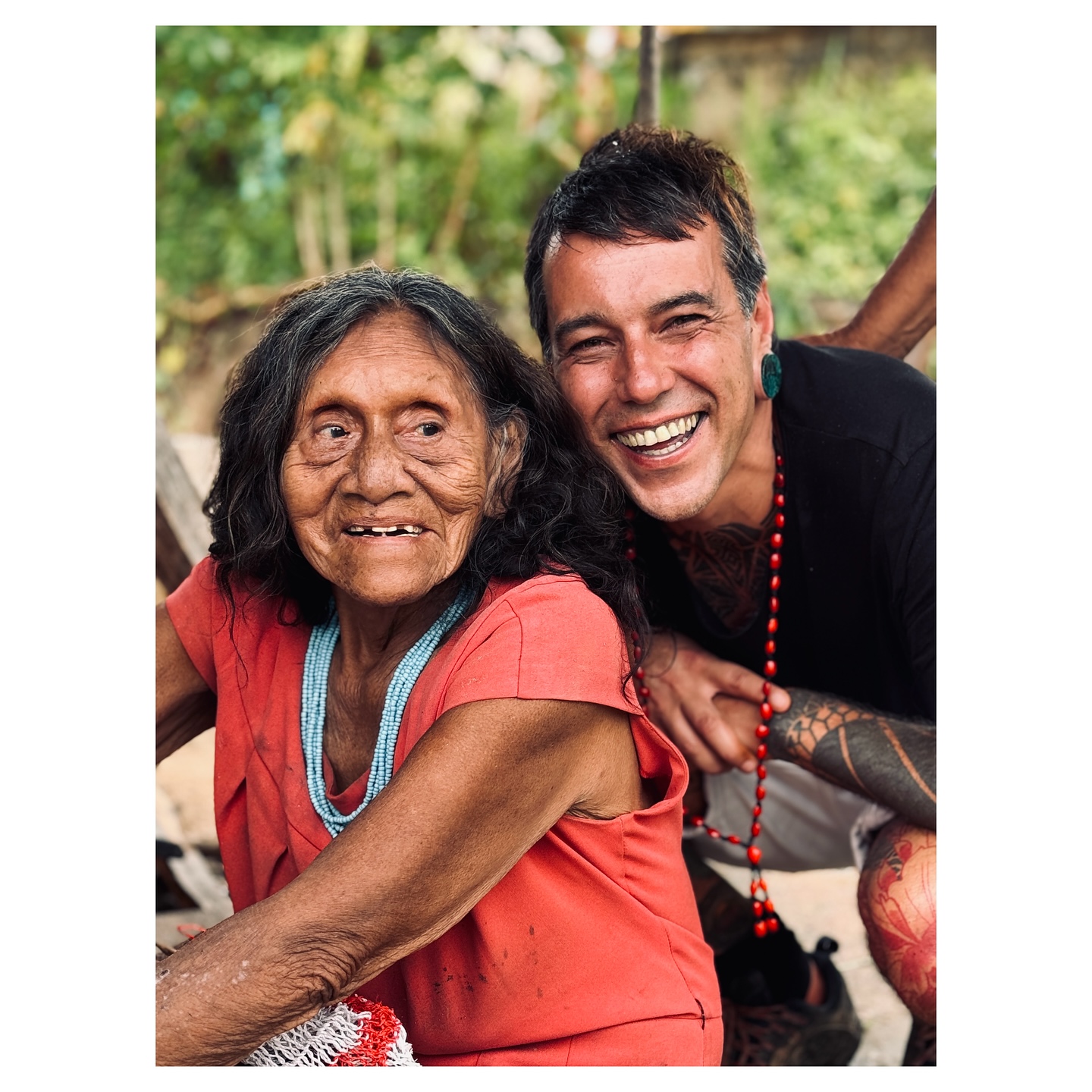 The label will begin with five releases, each one featuring icaros (sacred healing chants) and ancestral songs recorded in tribal languages. Many of these languages are endangered, and this project is meant to act as an archive—a way of preserving and honouring voices that are slowly fading into time.
All proceeds from the albums will go directly back to the communities who shared their music and stories with me. It’s a small way of giving back and supporting cultural survival through sound.
I’ve also been developing ideas for sound installations. During a recent trip to Japan, I came across quiet, soundproof pods in train stations — small spaces where people could take a break from the constant noise of the city. That inspired me to dream up something called Nature Sound Pods: peaceful listening capsules where people can step inside and be surrounded by the pure, unfiltered sounds of nature — birds, insects, rainfall, even the stillness of the forest.
These pods are meant to help people feel calm, present, and reconnected, offering a gentle reminder that we are part of the natural world.
Soon, I’ll also be presenting my first live event in London, alongside two collaborators. These are electroacoustic performances where field recordings take centre stage — blending natural sound, music, and activism. The first performance will be dedicated to Palestine and will function as a fundraiser, using sound and storytelling to raise awareness and support. It’s a way of showing how sound can hold space for truth, resistance, and collective healing.