ARTIST SPOTLIGHT: JASON RICHARDSON
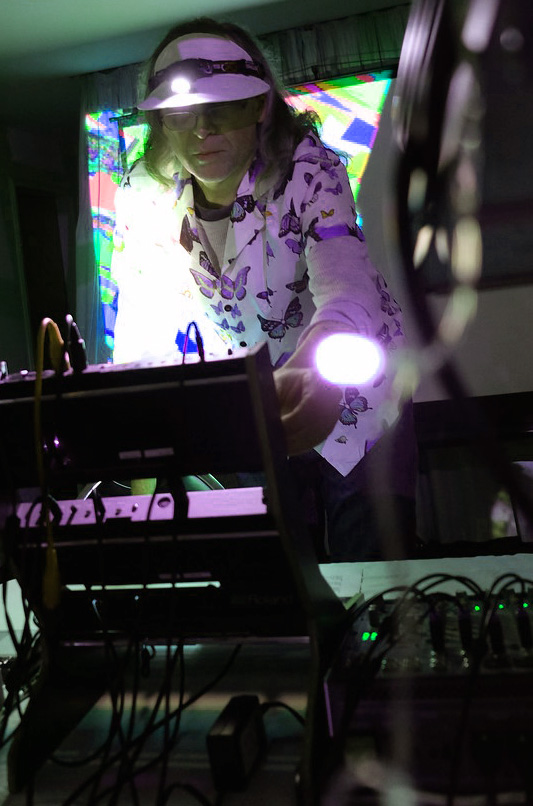
Artist Spotlight is our regular feature introducing you to Cities and Memory artists around the world with an in-depth interview. In this edition, we introduce you to Leeton, Australia-based musician, recordist and sound designer Jason Richardson, who works under the artist name Bassling, whose love for sound began with an unexpected trip to the cinema.
Tell us about your practice, Jason:
Moving to regional New South Wales early this century led me to consider how the environment influences music, largely prompted by the Unsound events in Wagga Wagga (that are now better known through the sister event in Poland).
As a musician on the periphery of that scene, I was invited to collaborate with Dr Alan Lamb in 2006. Lamb is renowned for sonifying the landscape with large-scale aeolian harp-like installations and shared his technique for building contact microphones, which would play a role in my project to remix the playgrounds of Leeton for the town’s centenary in 2012.
These two projects are signposts for how my focus shifted from making electronica to developing exhibitions, as I realised the audience for increasingly weird noises lay in galleries. I still make dance music though, as well as playing guitars and will try most things musical since it’s such a rewarding path to follow.
JASON'S CITIES AND MEMORY SOUNDS
The interview continues below ⬇️, and this map collects together all of Jason’s contributions to Cities and Memory:
What does it sound like where you're from?
Birdlife with industrial agriculture, such as galahs at dawn with the hum of the Rice Coop and possibly frost-fans sounding like distant helicopters if it’s cold.
How did you first discover a love of sound in your life?
When The Empire Strikes Back arrived at cinemas in 1980 (or maybe 1981 in Australia), I was seven years old. The new Star Wars movie was hugely anticipated and, when my aunt asked about seeing a film, quickly became the focus of our plans. I think we might’ve gone to the cinemas in George Street and joined the queue leading toward the box office.
At the point of buying tickets where we learned there was only one seat available and three of us. The next screening was going to be too late for a seven- or eight-year old.
Since we had travelled into the city and didn’t want the trip to be wasted, my aunt and her friend asked what else was showing. I don’t know what the options were but they bought tickets for Can’t Stop The Music.
Although I’ve seen the film a number of times now, I still remember how quickly my disappointment shifted as Steve Guttenberg roller-skated through New York streets singing along to ‘The Sound of the City’.
What is it that you love most about what you do?
My mother has instilled in me a belief that art can promote empathy.
She will say that a viewer needs to see through the eyes of another to appreciate art.
In my own way I’ve taken that insight and recognised the intimacy of audio, which can transport a listener to a setting that is otherwise out of reach – particularly in the case of contact mics, which reveal an internal resonance of objects.
Remixing brings a similar process, I guess, through allowing a producer to put their own perspective on existing material.
Can you share an example of your work with us?
The remix of a grizzly bear in the Yellowstone project is typical of my dance music-style remixes, which used the source recording to create instruments.
While the recordings of Leeton share the blend of natural and industrial elements, such as the lockdown project’s piece with butcherbird and passing traffic.
What's a contribution to Cities and Memory that you're proud of, and can you tell us a bit about it?
‘Boats in Cannaregio’ is one that captures some of my favourite instruments with electric ukulele, bass and drums.
Since I have played bass guitar for over 35 years, I had an idea to explore ukulele in the last decade as a kind of affinity for four-string instruments. That opened a new world of composition for me, as you can achieve all sorts of wonderful minor and seventh chords almost effortlessly.
There’s a bloke named Adrian who makes beautiful ukuleles by hand with the brand Honni and they are very inspiring, as well as being priced to be accessible.
Recommend us some of your favourite artists!
Dr Alan Lamb‘s album was recently reissued and there is a nice overview of his career by Lawrence English that was published following Lamb’s recent passing.
Marc Weidenbaum is an inspiration to me, both for his elegant prose and Junto projects. I’m also grateful for the collaborations with Marco from Naviar Records and the prompts to respond to haiku poems, as well as learn more about that style of writing.
What's a sound that has a particularly important significance for you?
The minor key melodies of the pied butcherbird are beautiful and usually announce the changing seasons in the Riverina.
When I was working as a curator at Griffith Pioneer Park Museum it was fun to whistle back and engage in a kind of call-and-response.
However, after sharing some recordings, one of the local Murrumbidgee Field Naturalists told me it was unethical to distract wildlife and I realised how my provocations were interrupted the lives of the birds I enjoyed.
Time for an equipment nerd question! What is some of your favourite kit, and why do you love it so much?
Ableton Live is a great tool, although I struggle to keep up with the features they’ve added in recent versions. I first started using this software in 2002 and appreciated how they didn’t try to mimic the outdated interfaces of existing audio technology.
Live has since become the place where I do most of my video editing as well, so it’d be great if they added features like reversing clips and maybe an option to adjust screen ratio with a zoom or something. Then again, maybe it’s something a third party can develop with Max.
What are you working on next?
Currently I’m hoping to conclude the most recent of the Shinobi Cuts Remix Chains that Ben Coffer has been managing.
These have been wonder-filled collaborations, where one producer remixes another and you get these albums evolving material that provide a compare-and-contrast insight into their techniques and aesthetics.
We got a grant to undertake the mastering sometime this year, thanks to Western Riverina Arts and Create NSW through funding from the NSW Government.