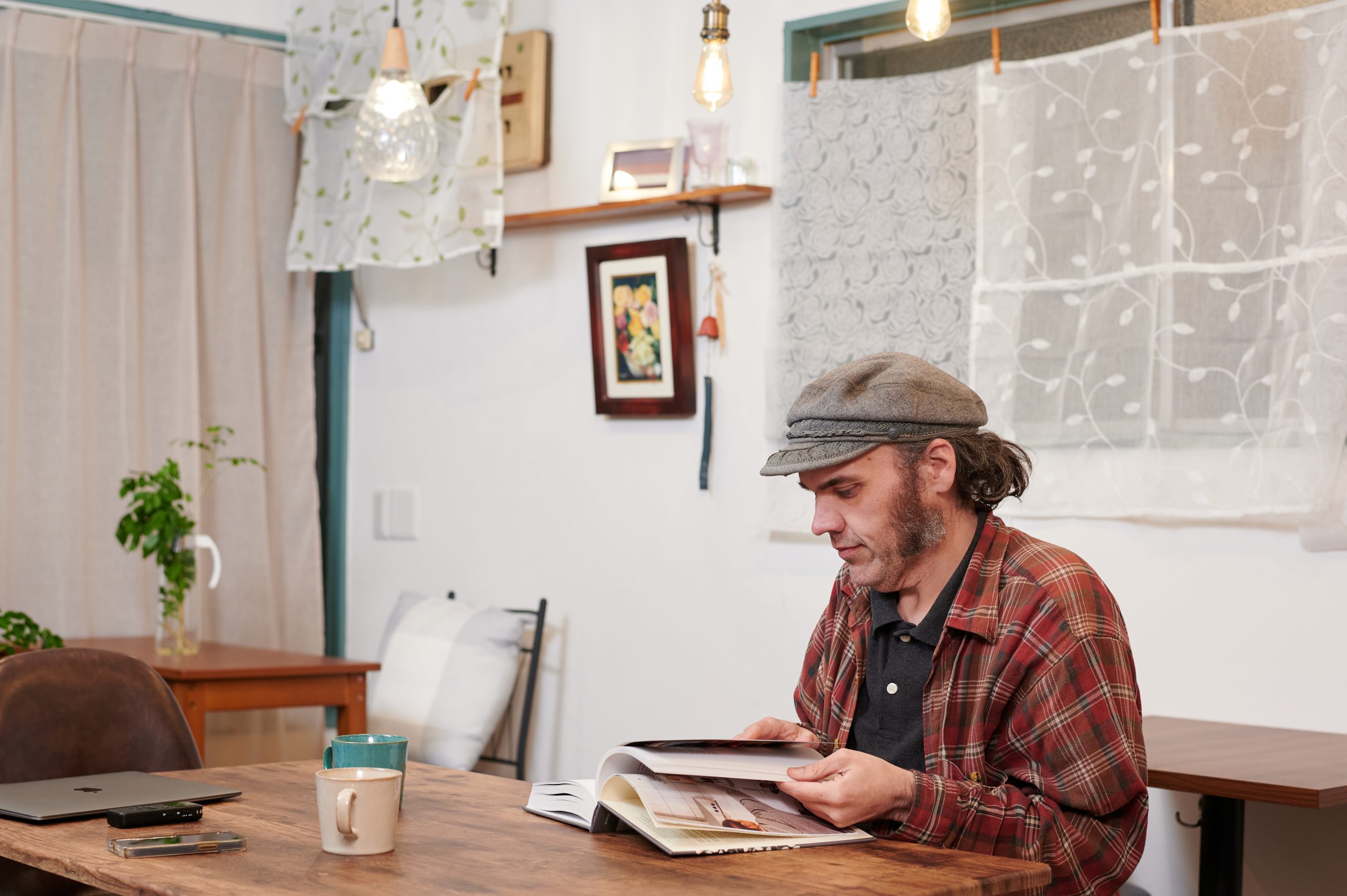
ARTIST SPOTLIGHT: JEFF BROWN
Artist Spotlight is our regular feature introducing you to Cities and Memory artists around the world with an in-depth interview. In this edition, we introduce you to Seattle-based musician and composer Jeff Brown, who joined us for Sonic Heritage and the Spring Project, and whose favourite sounds are middle C and frogs.
Tell us about your practice, Jeff:
It’s mostly ambient noise that is mixed with field recordings. I’m not exactly sure what category you would place them in; some are soundscapes, loops, and improvisations.
I also compose melodies and have structure to some of my pieces. There really is no set direction; I don’t think ahead and plan out what style I will be focusing on. Most of what I record has a broken quality to it, spotlighting imperfections and weaving in melancholy.
JEFF'S CITIES AND MEMORY SOUNDS
The interview continues below ⬇️, and this map collects together all of Jeff’s contributions to Cities and Memory:
What does it sound like where you're from?
Technically I live south of Seattle in a semi-rural area, but I perform live all around the area. I get the best of both worlds. The city with all its noise and commotion.
Then at home it’s birds, farm animals, and the sound of trains in the valley. I go on walks and take in the atmosphere. I sometimes record things when I’m out, but other times I’m gathering my thoughts for my writing.
How did you first discover a love of sound in your life?
 As a child, I loved film soundtracks. I watched a lot of Godzilla movies and loved the sound effects as well as the scores by Akira Ifukube and Yuji Koseki. Roger Miller’s Disney stuff in Robin Hood was another early love. Action movies always had high-energy music, which was inspiring; the TV show CHiPs had great funky music.
Things like The Beach Boys were early bands I listened to; as a teenager, I listened to more punk and metal. My mother wasn’t a big fan of The Beach Boys, so I picked Creedence Clearwater Revival and Van Morrison from her; her copy of Cosmo’s Factory that she bought from babysitting is one of my prized possessions. 60s Phil Spector, Jack Nitzsche, and Bert Kaempfert caught my attention, as well as the production of 50s/60s rock instrumentals like Duane Eddy, Chet Atkins, Jimmy Bryant, and Speedy West; doo-wop harmonies; and old radio dramas.
I used to help my grandfather in his garage repaint and work on cars, so a lot of that pre-1964music holds a special place in my heart and instantly transports me back to those moments. I still find great pleasure in sitting down with a Sherlock Holmes episode and getting lost in the sound effects. Jazz, like Coltrane and Miles Davis, Duke Ellington and Sun Ra — you could spend your whole life with just Ellington’s body of work. I found Robert Fripp and King Crimson in the mid-90s, and that unlocked a lot of doors for me; the soundscapes Fripp made in the 90s and early Frippertronics are essential to me. King Crimson and Fripp led to Shostakovich and Eno. Frank Zappa as well — his guitar work and orchestral pieces. He also appreciated doo-wop. That led to Edgard Varèse, Igor Stravinsky, and Iannis Xenakis.
The Residents were another group that turned my world upside down, and it was the way they used the entire recording studio as an instrument. Bach was a huge influence; I used to practice various pieces on my bass guitar before school when I was in junior high, so that was the mid-90s. Bruce Licher and his 12-string guitar work in Scenic and Savage Republic was a gateway for Independent Project Records and that incredible lineup. Choir pieces and Russian Orthodox chants are deeply influential to my work; the beauty is close to otherworldly. Bill Nelson and his home recording of ambient synths and soaring guitar work might be the biggest influence of them all.
In the late 90s I got into noise, which led to Aube, aka Akifumi Nakajima, and his fantastic body of work.
What is it that you love most about what you do?
 Recording and composing are equally enjoyable. I sometimes just hit record and do instant compositions, or improvisations which are more free form.
One of my habits over the last few years has been dialling back the amount or reverb/echo I use, I slowly adjust the wet/dry mix and force myself to sit with the music at a much dryer or unaffected setting. That technique is a key with my fuzz, I blend it with my clean signal until it’s a barely audible bed of static underneath my notes.
I attended a concert in Tokyo which feature pianist Fumi Endo (my article I wrote about her) and she is able to make breathtaking minimalist ambience with an acoustic piano. I want to have the confidence to that with an acoustic instrument as well someday.
Can you share an example of your work with us?
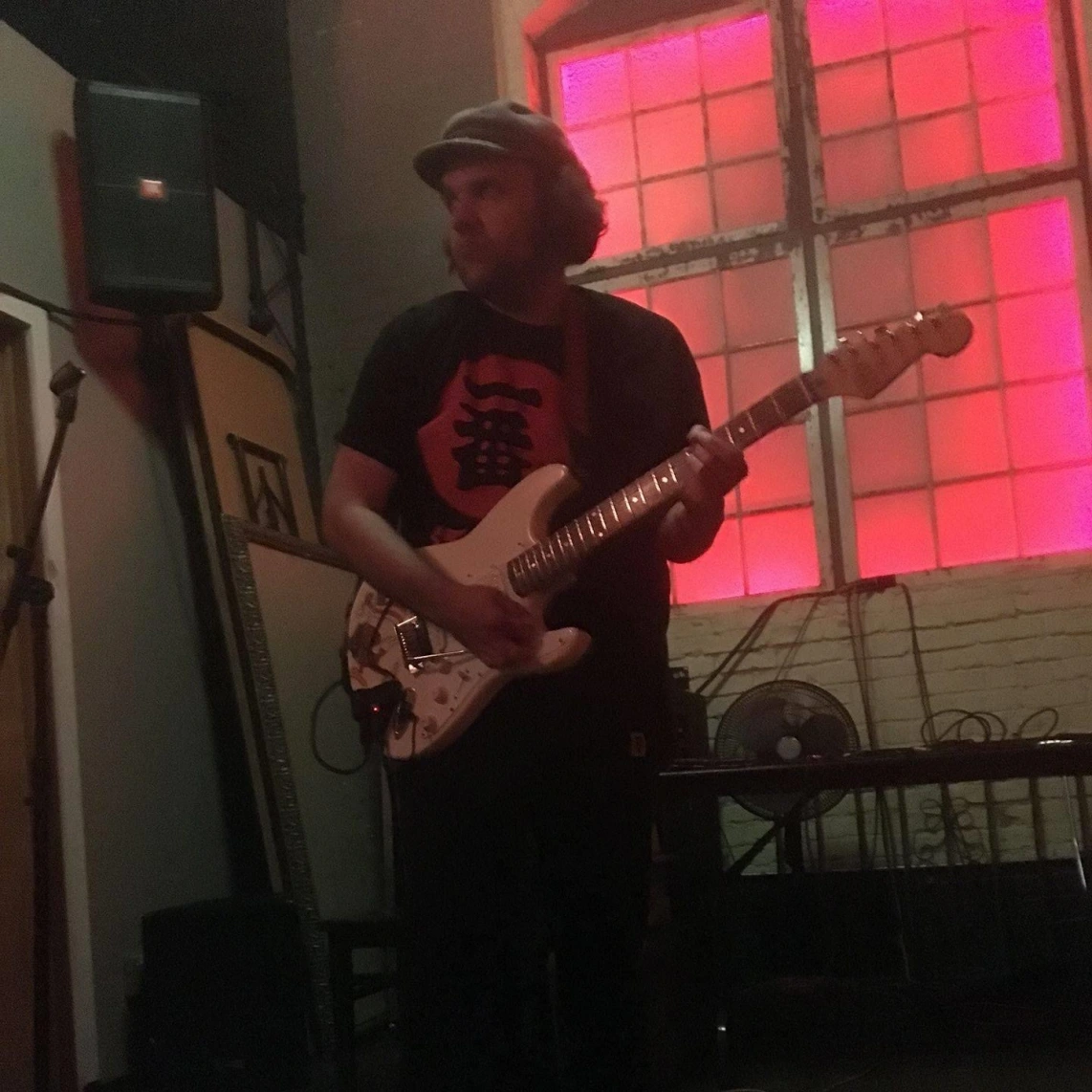
Holding the Bittersweet is a good example of the guitar work I do. It was in my opinion one of my successful attempts to craft what I had in my head and heart into a recording.
What's a contribution to Cities and Memory that you're proud of, and can you tell us a bit about it?
I like everything I’ve contributed, but my newest piece, “Knocking upon the unanswered door,” was a special moment for me. I mentioned it in my notes for the piece, but it really gave me a new perspective in regard to restraint.
I love a challenge, and purposely holding back on my own playing and seeing where the music went was at first frustrating but quickly became liberating. I don’t know everything, and sometimes going against my instincts leads to interesting musical spaces.
Recommend us some of your favourite artists!
Suishou no Fune is one of the best bands. There is a dream quality to everything they produce, but often it drifts into this wonderful wall of noise by the end of a song. Pirako and Kageo are fantastic people and longtime friends of mine; their choice of notes and ambience is really in line with my own.
Another wonderful friend and influence is stage actor/calligraphy artist Yumi Agawa. Yumi also does ring announcing and occasionally wrestled (she also stars in films and commercials, is a model, and has martial arts and sword skills, among countless other talents). I am a writer about Japanese pro wrestling, and that is how we originally met. Her work ethic is inspiring; she is usually in the middle of a stage production, but she also creates the most breathtaking calligraphy. The gentleness of the brushstrokes is like visual poetry, and it’s very calming art to have around my house. On stage she is a chameleon. I attended her one-woman play Agaworld, where she performed four short stories. The lights would go down between scenes, and Yumi would quickly change her outfit on stage, becoming a whole new character in a matter of seconds. I wish to do that with my music – convey multiple emotions in a short period of time.
What's a sound that has a particularly important significance for you?
Middle C—there is a centring to hearing it ring out. I will often deviate or destroy any semblance of order with my own music, but starting from a place of balance makes the chaos feel like more of a rebellion or catharsis.
Frogs are wonderful too; I have used recordings of frogs in a few pieces but not lately. I enjoy listening to field recordings, though.
Time for an equipment nerd question! What is some of your favourite kit, and why do you love it so much?
Hagstrom 8-string bass. It was something I learned about in the 90s, and I instantly wanted one because it looked cool and seemed like the perfect instrument for me and my interest in off-the-beaten-path sounds. I got one in the early 2000s, and it was everything I hoped for and more. The big chime that rings out almost makes it a new instrument; it’s not really a bass guitar nor is it a standard guitar—very baroque sounding.
I have a Fender Blender and an Ampeg Scrambler, which are key because they have the blend knobs to place the fuzz underneath my clean notes.
What are you working on next?
I am now a member of the reactivated folk/doom metal band Wolfmangler.
We have a video for our version of I Am Stretched On Your Grave.
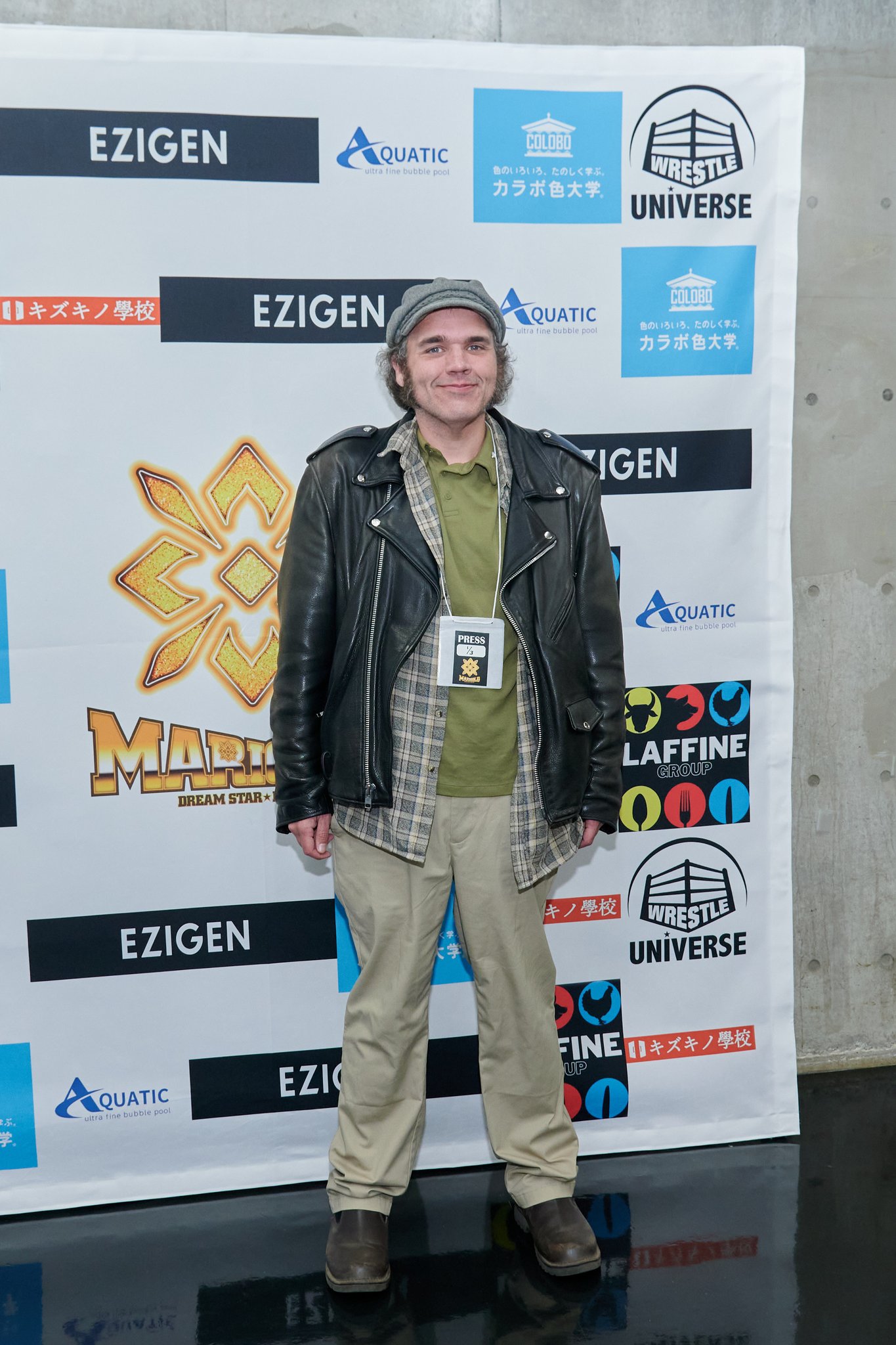
Photographs provided with permission by Masahiro Kubota.